
800.352.5247
- Seed Finder
- About
- Resources
- Find a Dealer
- Blue River Organic
- Viking Non-GMO
- Login
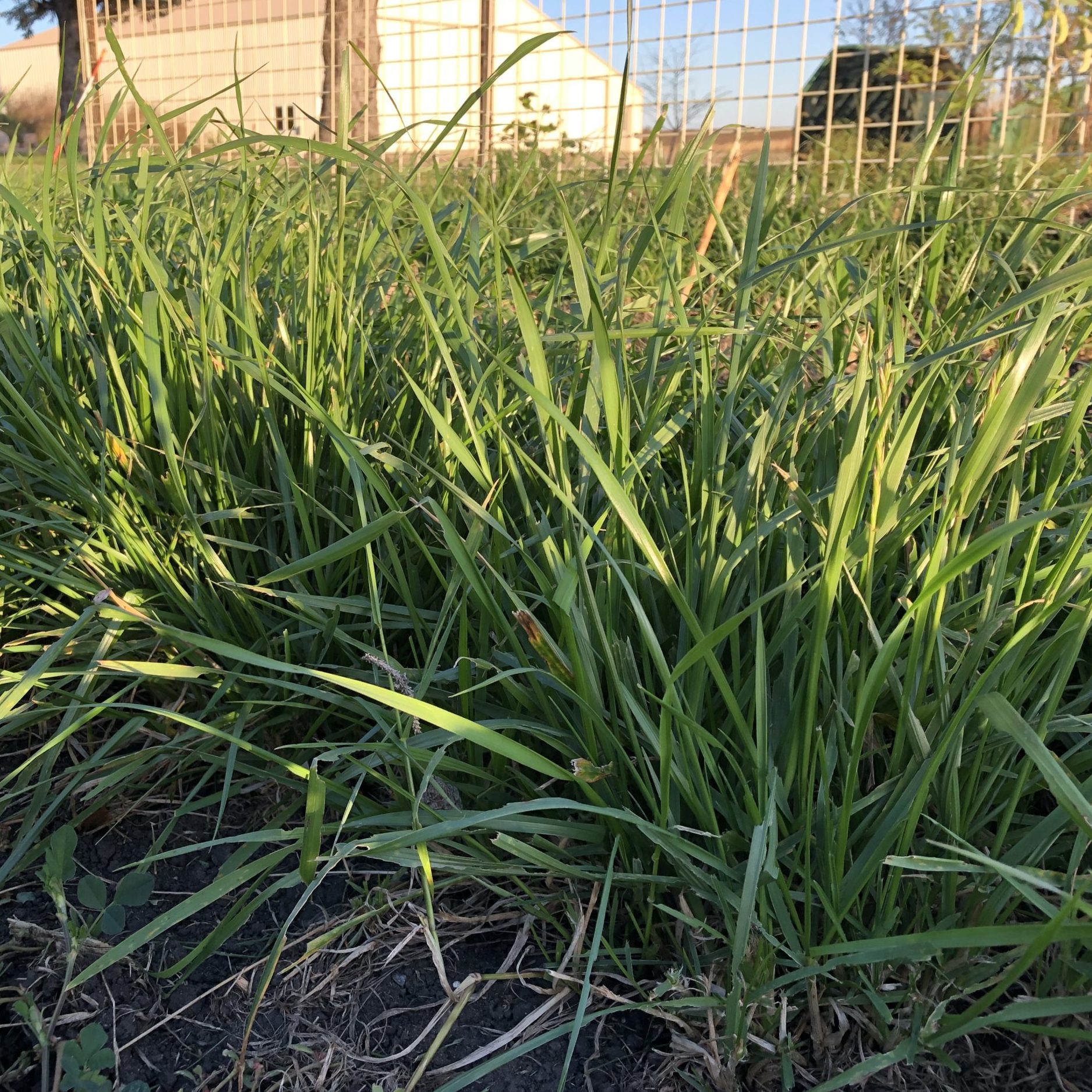
Green Spirit Italian ryegrass provides excellent quality forage for up to two years, with quick regrowth, very early development in the spring, and prolonged fall growing period in the fall, this seed species usually has greater overall productivity than other cool season grasses.

Price range: $16.70 through $92.00
Quick re-growth, early spring development and prolonged fall growth. High quality forage without low-quality stems and seed heads: will not head out in the seeding year unless a hard freeze sets in after seed has germinated. Behaves as an annual in the Upper Midwest. Recognized as excellent rotation crop for plowdown or emergency feed.
Best Use:
Best suited as a pasture crop seeded at full rate. When seeded at lower rate, can be used in hay mixtures and as a nurse crop for alfalfa seedings.
Adaptation:
Best on heavier, moisture-holding soils. Keep off of droughty ground.
Management:
Begin grazing at 4″-6″ and stop when the grass is down to 2″-3″.
Planting Date:
March-May, Aug. 1-15 (for late fall grazing).
Seeding:
30-35 lbs/acre alone or 3-4 lbs/acre as alfalfa cover crop.
Suggestions:
Use instead of small grain as cover crop over new alfalfa seedings. Can produce up to half ton more of additional hay in seeding year than a small grain. Seeding heavier than recommended amount may smother alfalfa seeding. Seed early spring onto pasture that has been closely grazed the previous fall to improve yield and quality.
| Species/Variety | Seeding Rate Drilled (lbs/acre) | Seeding Rate Broadcast/Aerial (lbs/acre) | Seeding Rate In Mix (lbs/acre) | Approx Seeds/lb | Recommended Seeding Date (S MN) | Seeding Depth (inches) | Predicted Hardy Through USDA Zone | Lifecycle | Potential Total N Fixation (lbs/acre/year) | Above Ground Biomass Production | Weed Suppression | Erosion Control | Quick Establishment | Cash Crop Interseed | Grazing Potential | Provide Pollinator Habitat | Drought Tolerance | Heat Tolerance | Saturated Soil Tolerance | Shade Tolerance |
|---|---|---|---|---|---|---|---|---|---|---|---|---|---|---|---|---|---|---|---|---|
| Barley, Spring | 50-100 | 72-120 | 24-48 | 14,300 | Mar–May, Aug–Sept | ½ – ¾ | 7 | Annual | - | Very Good | Very Good | Very Good | Very Good | Excellent | Very Good | Poor | Good | Good | Good | Fair |
| Barley, Winter | 50-100 | 72-120 | 24-48 | 8,000-14,000 | Aug–Sept | ½ – 1 | 6 | Winter Annual | - | Very Good | Very Good | Excellent | Very Good | Very Good | Very Good | Poor | Good | Good | Good | Fair |
| Oat, Spring | 25-100 | 48-96 | 16-48 | 14,500-18,500 | Mar–May, Aug–Sept | ½ – ¾ | 8 | Annual | - | Excellent | Good | Very Good | Excellent | Excellent | Excellent | Poor | Fair | Fair | Good | Fair |
| Rye, Cereal Winter | 50-150 | 50-150 | 25-75 | 18,000 | Aug–Nov | ½ – 1½ | 2-3 | Winter Annual | - | Excellent | Excellent | Excellent | Excellent | Excellent | Excellent | Poor | Very Good | Very Good | Very Good | Good |
| Ryegrass, Annual | 15-20 | 25-30 | 4-5 | 227,000 | Mar–May, Aug–Sept | ¼ – ½ | 6 | Annual | - | Excellent | Good | Very Good | Very Good | Excellent | Excellent | Poor | Fair | Fair | Very Good | Very Good |
| Ryegrass, Italian | 15-20 | 25-30 | 4-5 | 227,000 | Mar–May, Aug–Sept | ¼ – ½ | 5-6* | Winter Annual | - | Excellent | Good | Very Good | Very Good | Excellent | Excellent | Poor | Fair | Fair | Very Good | Very Good |
| Triticale, Winter | 30-100 | 60-120 | 15-40 | 15,000 | Aug–Early Oct | ½ – 1½ | 4-5* | Winter Annual | - | Very Good | Very Good | Excellent | Very Good | Excellent | Excellent | Poor | Good | Good | Good | Good |
| Wheat, Winter | 30-75 | 60-90 | 15-40 | 11,000-15,000 | Aug–Early Oct | 1 – 2 | 5* | Winter Annual | - | Very Good | Very Good | Excellent | Very Good | Excellent | Excellent | Poor | Good | Good | Good | Good |
Predicted Hardy: ID = Insufficient Data, NFT = Not Frost Tolerant
*Highly variable on winter growing conditions, planting date, snow cover, etc.
Have you used this product? Let us know what you think.