800.352.5247
- Seed Finder
- About
- Resources
- Find a Dealer
- Blue River Organic
- Viking Non-GMO
- Login
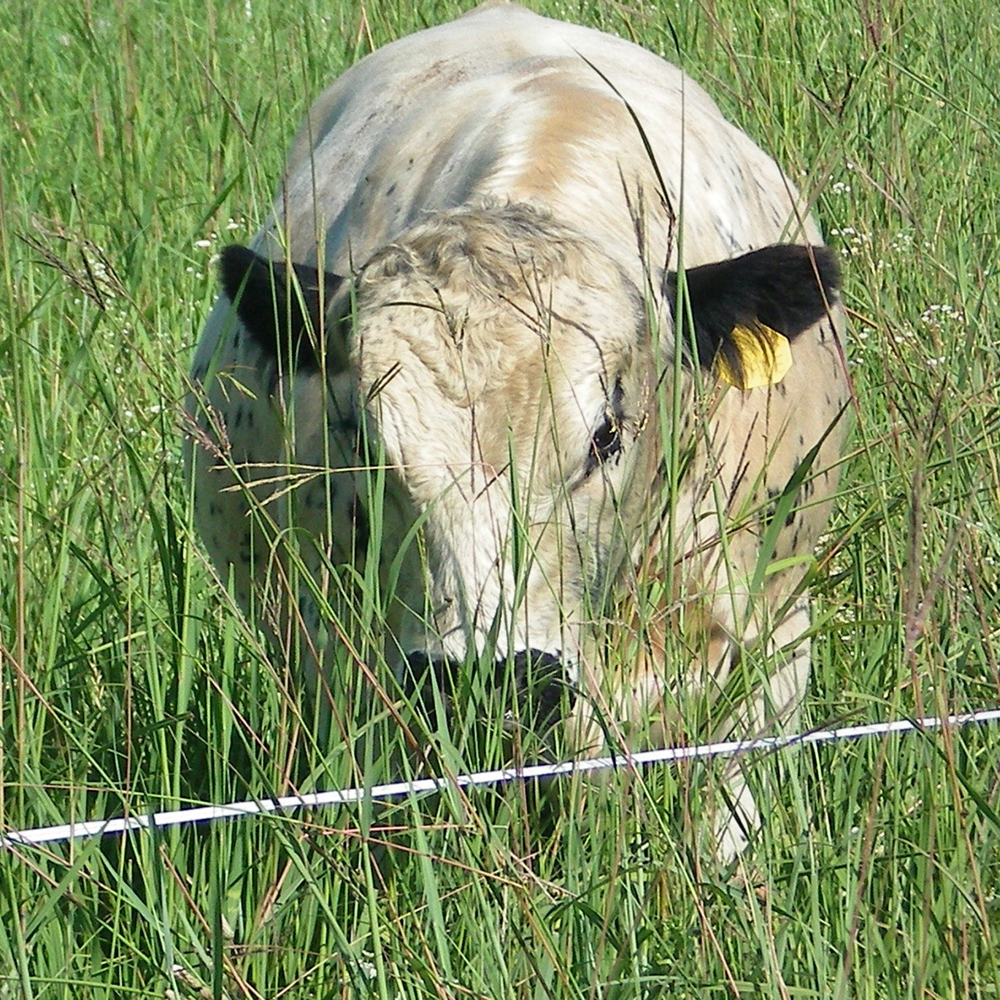
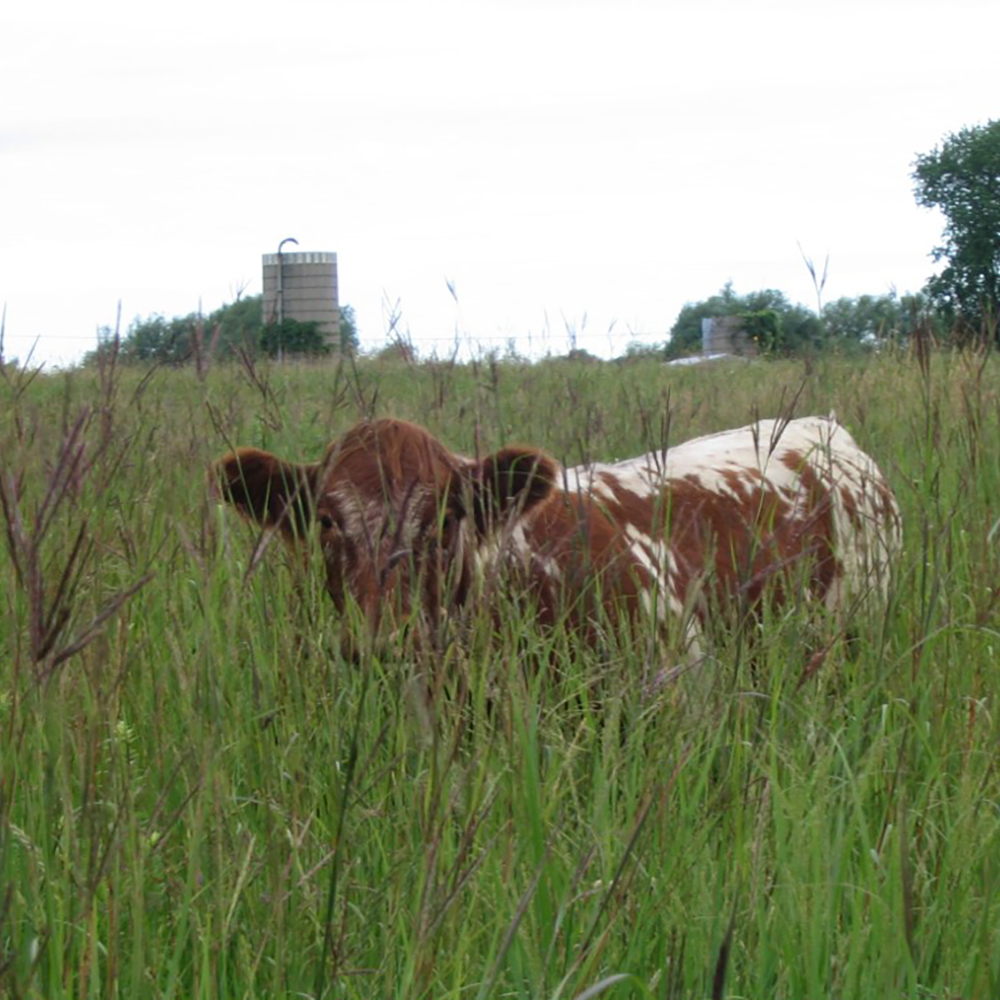
Grassworks Prairie Pasture Mix is a blend of native warm‑season prairie grasses and native prairie forbs (broadleaves) designed to provide excellent grazing for cattle, sheep, and bison from mid‑June through mid‑September—the traditional “summer slump” period for cool‑season pastures.
This mix was created in collaboration with GrassWorks, Inc., NRCS, the Audubon Society, and University of Wisconsin–Extension grazing specialists. A portion of the proceeds from the sale of this mix is directed back to GrassWorks, Inc. to support their efforts in providing leadership and education to farmers and consumers for the advancement of managed, grass‑based agriculture.
Native prairies historically included both grasses and flowering forbs. In addition to providing high‑quality grazing, they offered valuable ecosystem services such as pollinator habitat, food sources, nesting habitat for ground‑nesting birds, and cover for small mammals. This grazing mix moves closer to that ecological ideal while still providing economically meaningful forage production for commercial farms. Converting approximately 25% of your pasture acreage to warm‑season native species can provide a more consistent forage supply and improved weight gains throughout the growing season compared to cool‑season pastures alone.
Forbs in this mix were selected to ensure at least three species flower during each of the three major blooming periods of the growing season. Early‑season species typically flower in May and June, often before grazing begins. Mid‑ and late‑season forbs may not bloom every year depending on stocking density and grazing intensity. Even without annual flowering, well‑established forbs will continue contributing to forage quality when given adequate recovery periods.
Vary both the date you begin grazing each year and the warm‑season paddock where you start grazing after moving off cool‑season paddocks. This rotation increases the likelihood of later‑flowering forbs expressing their full growth and bloom potential.
If seeding into cropland: Till and pack before and after seeding, or no‑till. For late‑fall dormant seedings, the best success occurs with no‑till drilling into soybean stubble or broadcasting followed by rolling.
If seeding into pasture: Cool‑season species must be terminated before drilling or broadcasting this mix. If not removed, established cool‑season perennial grasses will outcompete new warm‑season seedlings. Plan weed‑control operations to allow for two passes of spraying or tillage to prepare the seedbed.
Management: Begin grazing in mid to late June. Leave a residual height of eight inches and allow a recovery period of 45–60 days before grazing again in the fall. Do not graze during the establishment year. Follow standard prairie‑establishment guidelines. Mow three to four times during the first year to manage weed competition.
Planting Date: April through mid‑June, or late October through November for dormant seeding.
Seeding: Drill 1/4 inch deep, or broadcast and roll afterward. A firm seedbed provides the best establishment. For spring seedings, use 20–35 lbs/acre of oats as a companion crop to help suppress weeds.
This mix should be planted at 10.6 PLS (pure live seed) lbs per acre and is sold by the acre.
| Common Name | Scientific Name | % of Mix | Seeds / Sq Ft |
|---|---|---|---|
| Big Bluestem | Andropogon gerardii | 33.07% | 12.86 |
| Indiangrass | Sorghastrum nutans | 18.90% | 8.82 |
| Little Bluestem | Schizachyrium scoparium | 5.67% | 3.31 |
| Canada Wild Rye | Elymus canadensis | 9.45% | 1.91 |
| Rough Dropseed | Sporobolus compositus | 1.89% | 2.20 |
| Virginia Wild Rye | Elymus virginicus | 9.45% | 1.54 |
| Common Name | Scientific Name | % of Mix | Seeds / Sq Ft |
|---|---|---|---|
| Black-eyed Susan | Rudbeckia hirta | 0.28% | 1.01 |
| Yellow Coneflower | Ratibida pinnata | 0.38% | 0.44 |
| Smooth Blue Aster | Symphyotrichum laeve | 0.09% | 0.2 |
| Canada Milkvetch | Astragalus canadensis | 4.72% | 3.12 |
| White Prairie Clover | Dalea candida | 1.89% | 1.4 |
| Purple Prairie Clover | Dalea purpurea | 3.78% | 2.64 |
| Partridge Pea | Chamaecrista fasciculata | 3.78% | 0.4 |
| Cup Plant | Silphium perfoliatum | 0.57% | 0.03 |
| Foxglove Beardtongue | Penstemon digitalis | 0.24% | 1.19 |
| Pale Purple Coneflower | Echinacea pallida | 0.95% | 0.19 |
| Ox-eye Sunflower | Heliopsis helianthoides | 1.89% | 0.46 |
| Round-headed Bush Clover | Lespedeza capitata | 0.95% | 0.29 |
| Wild Bergamot | Monarda fistulosa | 0.38% | 1.03 |
| Golden Alexanders | Zizia aurea | 0.47% | 0.2 |
| Rosinweed | Silphium integrifolium | 0.76% | 0.04 |
| Showy Tick Trefoil | Desmodium canadense | 0.47% | 0.1 |
$250.00 / Acre
Your hay or pasture grass seed has to work for you—adapted to the purpose, place, and management you have in mind. We usually carry two or more varieties of each species, ranging from high quality forage to more economical selections when forage quality is not as vital. We also have several hay and pasture grass mixes that combine the advantages of several species in one bag.