800.352.5247
- Seed Finder
- About
- Resources
- Find a Dealer
- Blue River Organic
- Viking Non-GMO
- Login

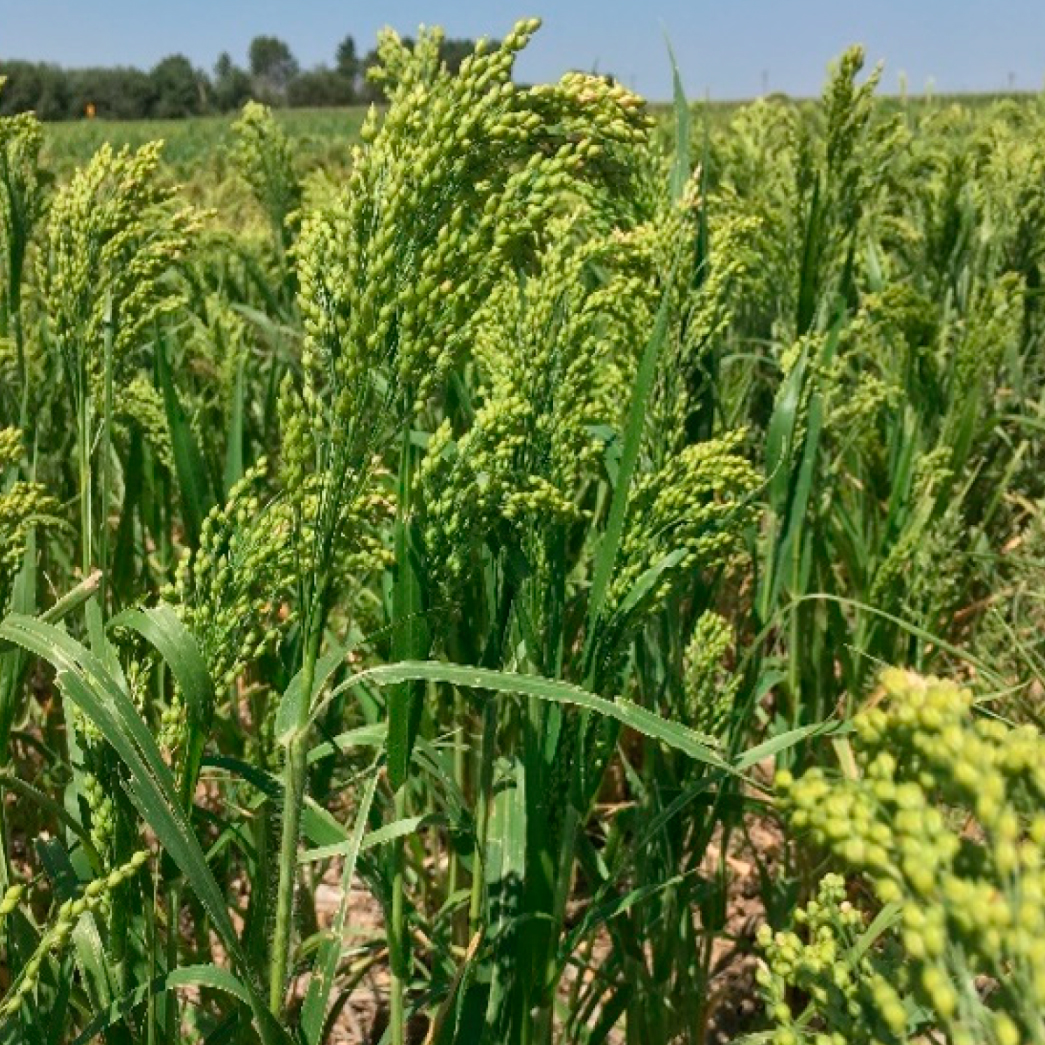
Best Use: Hay, pasture, and silage. Excellent feed for cattle, horses, and sheep. No prussic acid problems.
Adaptation: Japanese millet is tolerant of wet soils and will survive standing water, but does not perform well on droughty or low fertility soils. This seed for sale is not frost-tolerant.
Management: Can be cut 2 or 3 times. Cut before heading and leave 6”of stubble for faster recovery. In a single-cut system, it can reach 5’ tall. Earlier cutting leads to higher quality, lower yields, and more drying time.
Planting Date: Mid-May to early June (soil 62°F+)
Seeding: Seed 25-35 lbs/acre ½”-1”deep
$66.00 / 50lb Bag
Millets are some of the oldest of cultivated crops harvested for food or feed. The crop is favored due to its productivity and short growing season under dry, high-temperature conditions.
Multi-Cut Species
Single-Cut Species
Minimal regrowth that may be direct grazed.
| Species/Variety | Seeding Rate Drilled (lbs/acre) | Seeding Rate Broadcast/Aerial (lbs/acre) | Seeding Rate In Mix (lbs/acre) | Approx Seeds/lb | Recommended Seeding Date (S MN) | Seeding Depth (inches) | Predicted Hardy Through USDA Zone | Lifecycle | Potential Total N Fixation (lbs/acre/year) | Above Ground Biomass Production | Weed Suppression | Erosion Control | Quick Establishment | Cash Crop Interseed | Grazing Potential | Provide Pollinator Habitat | Drought Tolerance | Heat Tolerance | Saturated Soil Tolerance | Shade Tolerance |
|---|---|---|---|---|---|---|---|---|---|---|---|---|---|---|---|---|---|---|---|---|
| Millet, Japanese | 25-35 | 35-50 | 5-15 | 145,000 | Late May–July | ½ – 1 | NFT | Annual | - | Very Good | Very Good | Very Good | Excellent | Poor | Very Good | Poor | Excellent | Excellent | Very Good | Fair |
| Millet, Proso | 20-30 | 30-45 | 5-15 | 80,000 | Late May–July | ½ – 1 | NFT | Annual | - | Very Good | Very Good | Very Good | Excellent | Poor | Very Good | Poor | Excellent | Excellent | Fair | Good |
| Sorghum, Grain | 10-15 | NR | 5-10 | 15,000 | Late May–July | ½ – 1½ | NFT | Annual | - | Good | Very Good | Good | Excellent | Poor | Good | Poor | Excellent | Excellent | Fair | Fair |
| Sorghum-Sudangrass | 20-25 | 30-50 | 5-10 | 18,000 | Late May–July | ½ –1 | NFT | Annual | - | Excellent | Excellent | Very Good | Excellent | Poor | Very Good | Poor | Excellent | Excellent | Fair | Fair |
Predicted Hardy: ID = Insufficient Data, NFT = Not Frost Tolerant
*Highly variable on winter growing conditions, planting date, snow cover, etc.

Have you used this product? Let us know what you think.