800.352.5247
- Seed Finder
- About
- Resources
- Find a Dealer
- Blue River Organic
- Viking Non-GMO
- Login

Best Use: Can compliment many different grazing companions (including summer annuals).
Management: Allow 6 weeks to establish, then can be grazed at monthly intervals
Planting Date: April to August
Seeding: 4-6 lbs/acre, ¼ to ½ inch deep
This product cannot be shipped to the state of Oregon or Washington
Price range: $23.50 through $80.00
BRASSICAS
Brassica is a genus of plants in the mustard (Brassicaceae) plant family, also known as cruciferous cole crops. More than 30 wild species and hybrids are in cultivation, plus numerous cultivars and hybrids of cultivated origin. Almost all parts of cultivated species contain nutritional value, including the root, stems, leaves, flowers, buds, and seeds. They provide high amounts of Vitamin C and soluble fiber.
Best uses: Cover crop and fall grazing for livestock. All brassicas have highly digestible cell walls, very high protein levels, and are very succulent. Excellent for grazing and cover cropping (typically as part of a mix.) High dry matter production both above and below ground builds organic matter in the soil. Also good for deer food plots due to their high palatability, frost-tolerance, and availability in the fall. Use for fall grazing cattle, sheep, hogs, and in food plots.
Adaptation: Brassica plants require well-drained soil rich in organic matter with a PH between 5.5 and 6.5.
Grazing: Graze Brassicas carefully; too much intake can cause health problems ins cattle. Mixing with grass improves ruminant digestion and utilization. Allow livestock time to adjust to a change in diet when beginning grazing.
| Species/Variety | Seeding Rate Drilled (lbs/acre) | Seeding Rate Broadcast/Aerial (lbs/acre) | Seeding Rate In Mix (lbs/acre) | Approx Seeds/lb | Recommended Seeding Date (S MN) | Seeding Depth (inches) | Predicted Hardy Through USDA Zone | Lifecycle | Potential Total N Fixation (lbs/acre/year) | Above Ground Biomass Production | Weed Suppression | Erosion Control | Quick Establishment | Cash Crop Interseed | Grazing Potential | Provide Pollinator Habitat | Drought Tolerance | Heat Tolerance | Saturated Soil Tolerance | Shade Tolerance |
|---|---|---|---|---|---|---|---|---|---|---|---|---|---|---|---|---|---|---|---|---|
| Camelina, Winter | 6-8 | 10 | 1-2 | 400,000 | Sep–Oct | ¼ – ¾ | 3 | Winter Annual | - | Good | Fair | Good | Good | Fair | Poor | Excellent | Fair | Fair | Poor | Fair |
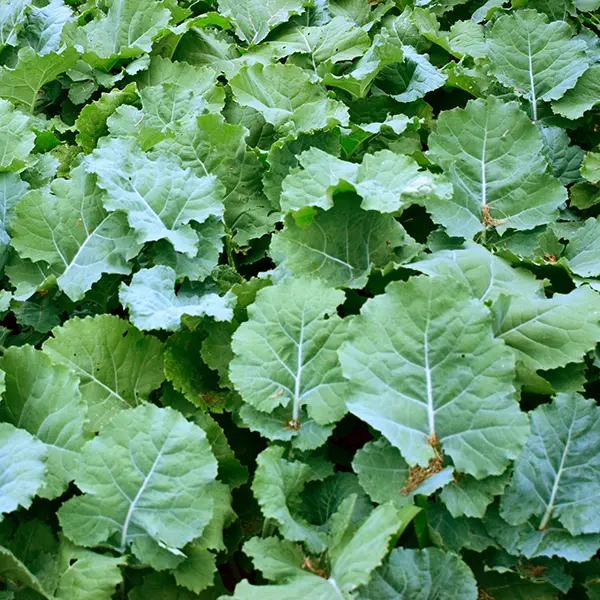
| Collards | 6-8 | 10-15 | 3-4 | 175,000 | Apr–Aug | ¼ – ½ | 7 | Biennial | - | Good | Very Good | Good | Good | Good | Very Good | Poor | Very Good | Good | Fair | Good |
| Kale, Forage | 3-4 | 4-5 | 1-2 | 144,000 | Mar–May, Jul–Sept | ¼ – ½ | 6* | Annual | - | Very Good | Very Good | Good | Excellent | Very Good | Excellent | Good | Good | Fair | Fair | Good |
| Mustard, Yellow | 5-10 | 10-15 | 3-4 | 180,000 | Feb–Apr, Aug–Sept | ¼ – ¾ | ID | Annual | - | Good | Very Good | Good | Very Good | Good | Poor | Excellent | Good | Good | Fair | Good |
| Radish, Daikon | 6-8 | 8-9 | 2-3 | 25,000 | Aug–Sept | ¼ – ½ | 6* | Annual | - | Good | Very Good | Good | Excellent | Good | Very Good | Good | Good | Good | Fair | Good |
| Rapeseed | 4-7 | 7-9 | 1-2 | 145,000 | Mar–May, July–Sept | ¼ – ½ | 6* | Annual | - | Good | Good | Good | Very Good | Very Good | Good | Good | Good | Good | Fair | Good |
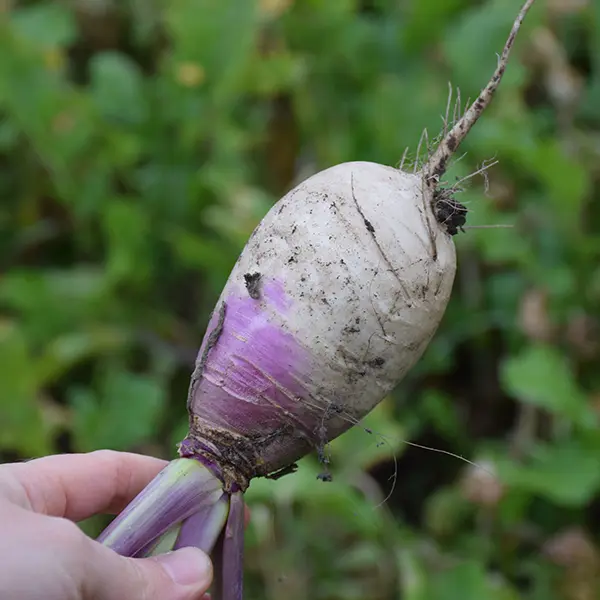
| Turnip, Purple Top | 3-5 | 5-6 | 1-2 | 220,000 | Mar–May, July–Sept | ¼ – ½ | 4* | Biennial | - | Good | Good | Good | Good | Good | Excellent | Fair | Fair | Fair | Fair | Fair |
Predicted Hardy: ID = Insufficient Data, NFT = Not Frost Tolerant
*Highly variable on winter growing conditions, planting date, snow cover, etc.
Have you used this product? Let us know what you think.