800.352.5247
- Seed Finder
- About
- Resources
- Find a Dealer
- Blue River Organic
- Viking Non-GMO
- Login
Seeding
25-100 lbs/acre at 1/2″ to 3/4″ deep. Drill or increase rate to broadcast seed.
Price range: $26.00 through $880.00
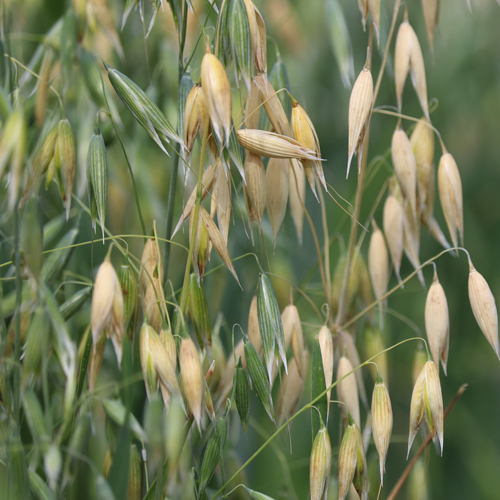
Oats are a vital part of strong farming systems, and we carry a wide selection of organic and conventional, non-GMO spring oat seed varieties to meet any production need. Whether you aim to produce milling-quality oats, maximize bushels for animal feed, provide a nurse crop for alfalfa or forages, plant an economical cover crop, use spring oats for hay, produce straw, or meet a niche, food-grade market, we have the best adapted spring oats to meet your farm goals.
Oats are an annual cereal grain that can be used as a nurse crop to establish alfalfa, chopped for livestock feed, or raised for grain. Spring oats are planted very early in the spring, are tolerant to cold, fast establishing, and mature in the middle of the summer. We are a dedicated supporter of oat breeding at the University level and carry a diverse selection of oat varieties to suit any purpose.
Planting: Oats should be drilled 1-2 in. deep into a firm seedbed in early spring.
Planting Rate (straight for grain/forage): 80-110 lbs. (3 bu/A).
Planting Rate (with alfalfa): 40-50 lbs (1½ – 2 bu/A).
| Species/Variety | Seeding Rate Drilled (lbs/acre) | Seeding Rate Broadcast/Aerial (lbs/acre) | Seeding Rate In Mix (lbs/acre) | Approx Seeds/lb | Recommended Seeding Date (S MN) | Seeding Depth (inches) | Predicted Hardy Through USDA Zone | Lifecycle | Potential Total N Fixation (lbs/acre/year) | Above Ground Biomass Production | Weed Suppression | Erosion Control | Quick Establishment | Cash Crop Interseed | Grazing Potential | Provide Pollinator Habitat | Drought Tolerance | Heat Tolerance | Saturated Soil Tolerance | Shade Tolerance |
|---|---|---|---|---|---|---|---|---|---|---|---|---|---|---|---|---|---|---|---|---|
| Barley, Spring | 50-100 | 72-120 | 24-48 | 14,300 | Mar–May, Aug–Sept | ½ – ¾ | 7 | Annual | - | Very Good | Very Good | Very Good | Very Good | Excellent | Very Good | Poor | Good | Good | Good | Fair |
| Barley, Winter | 50-100 | 72-120 | 24-48 | 8,000-14,000 | Aug–Sept | ½ – 1 | 6 | Winter Annual | - | Very Good | Very Good | Excellent | Very Good | Very Good | Very Good | Poor | Good | Good | Good | Fair |
| Oat, Spring | 25-100 | 48-96 | 16-48 | 14,500-18,500 | Mar–May, Aug–Sept | ½ – ¾ | 8 | Annual | - | Excellent | Good | Very Good | Excellent | Excellent | Excellent | Poor | Fair | Fair | Good | Fair |
| Rye, Cereal Winter | 50-150 | 50-150 | 25-75 | 18,000 | Aug–Nov | ½ – 1½ | 2-3 | Winter Annual | - | Excellent | Excellent | Excellent | Excellent | Excellent | Excellent | Poor | Very Good | Very Good | Very Good | Good |
| Ryegrass, Annual | 15-20 | 25-30 | 4-5 | 227,000 | Mar–May, Aug–Sept | ¼ – ½ | 6 | Annual | - | Excellent | Good | Very Good | Very Good | Excellent | Excellent | Poor | Fair | Fair | Very Good | Very Good |
| Ryegrass, Italian | 15-20 | 25-30 | 4-5 | 227,000 | Mar–May, Aug–Sept | ¼ – ½ | 5-6* | Winter Annual | - | Excellent | Good | Very Good | Very Good | Excellent | Excellent | Poor | Fair | Fair | Very Good | Very Good |
| Triticale, Winter | 30-100 | 60-120 | 15-40 | 15,000 | Aug–Early Oct | ½ – 1½ | 4-5* | Winter Annual | - | Very Good | Very Good | Excellent | Very Good | Excellent | Excellent | Poor | Good | Good | Good | Good |
| Wheat, Winter | 30-75 | 60-90 | 15-40 | 11,000-15,000 | Aug–Early Oct | 1 – 2 | 5* | Winter Annual | - | Very Good | Very Good | Excellent | Very Good | Excellent | Excellent | Poor | Good | Good | Good | Good |
Predicted Hardy: ID = Insufficient Data, NFT = Not Frost Tolerant
*Highly variable on winter growing conditions, planting date, snow cover, etc.
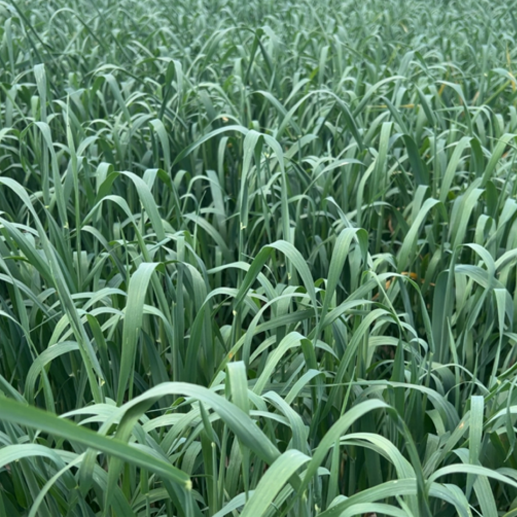
Here’s a slideshow depicting oat fields in Nasau, IA on June 24 and July 15, 2026


Have you used this product? Let us know what you think.