800.352.5247
- Seed Finder
- About
- Resources
- Find a Dealer
- Blue River Organic
- Viking Non-GMO
- Login
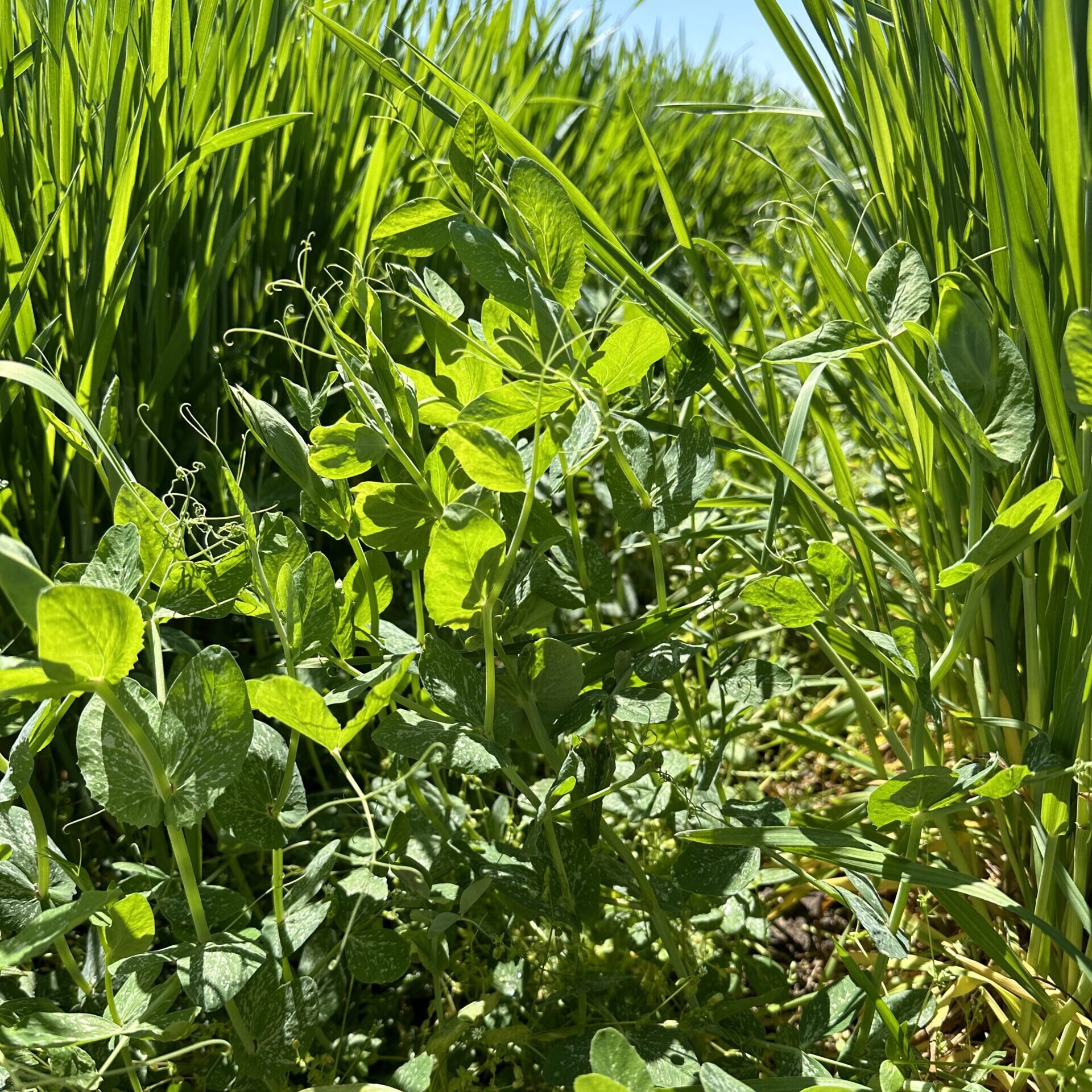
Seeding: 50-100 lbs/acre drilled 2″ to 3″ deep with a small grain for best winter hardiness.
$42.00 / 50lb Bag
out of stock
Peas are incredibly versatile. The best field pea depends on your goals, but whether you want to harvest for grain, improve soil health as a cover crop, or provide a high-protein livestock forage/silage, we have a pea or pea mixture to meet your need.
Cool-season annual legume. Have a low carbon to nitrogen ratio, so the crop residue decomposes quickly.
Best Use: Excellent forage quality for livestock, silage, or cover crop/plow down. Can produce up to 2-4 tons DM/acre. Pea biomass contains 3.0 to 3.5 percent nitrogen on a dry weight basis.
Requirements: Prefers cool weather and well-drained soils. Does not tolerate acidic soils. Inoculate before planting. Can withstand colder autumn temperatures than field peas.
Management: Winter hardiness in the Upper Midwest is highly variable, though newer varieties are extending the winter hardy range. See description for Wyowinter.
Planting Date*: March – April or Aug – Sept (southern MN). If spring seeding, seed as early as possible.
Seeding: 50-100 lbs/acre drilled 2-3” deep.
| Species/Variety | Seeding Rate Drilled (lbs/acre) | Seeding Rate Broadcast/Aerial (lbs/acre) | Seeding Rate In Mix (lbs/acre) | Approx Seeds/lb | Recommended Seeding Date (S MN) | Seeding Depth (inches) | Predicted Hardy Through USDA Zone | Lifecycle | Potential Total N Fixation (lbs/acre/year) | Above Ground Biomass Production | Weed Suppression | Erosion Control | Quick Establishment | Cash Crop Interseed | Grazing Potential | Provide Pollinator Habitat | Drought Tolerance | Heat Tolerance | Saturated Soil Tolerance | Shade Tolerance |
|---|---|---|---|---|---|---|---|---|---|---|---|---|---|---|---|---|---|---|---|---|
| Clover, Balansa | 5-8 | 6-9 | 2-3 | 500,000 | Mar–May, July–Sept | ¼ | 5 | Annual | 50-100 | Very Good | Excellent | Good | Fair | Very Good | Excellent | Very Good | Good | Very Good | Very Good | Very Good |
| Clover, Berseem | 12-15 | 15-20 | 2-5 | 200,000 | Mid May–Aug | ¼ – ½ | 7 | Annual | 55-100 | Very Good | Very Good | Very Good | Good | Very Good | Excellent | Very Good | Good | Very Good | Fair | Good |
| Clover, Crimson | 12-20 | 25-30 | 2-5 | 150,000 | June–Sept | ¼ – ½ | 6* | Annual | 50-90 | Very Good | Very Good | Very Good | Good | Excellent | Excellent | Very Good | Fair | Good | Fair | Very Good |
| Clover, Mammoth Red | 8-12 | 15-18 | 2-5 | 272,000 | Feb–May, Aug | ¼ – ½ | 4 | Biennial | 70-150 | Very Good | Very Good | Excellent | Very Good | Excellent | Fair | Excellent | Good | Good | Good | Very Good |
| Clover, Medium Red | 8-12 | 15-18 | 2-5 | 272,000 | Feb–May, Aug | ¼ – ½ | 4 | Perennial | 70-150 | Very Good | Very Good | Excellent | Very Good | Excellent | Very Good | Excellent | Good | Good | Good | Very Good |
| Faba Bean | 100-150 | 60-100 | 15-50 | 1,900 | Mar–Apr, Aug–Mid Sept | 1 – 3 | ID | Annual | 50-140 | Good | Fair | Fair | Good | Good | Good | Very Good | Poor | Fair | Excellent | ID |
| Lentil | 40-50 | 60-75 | 20-30 | 12,000-19,000 | Mar–May, Aug–Sept | ½ – 2 | ID | Annual | 5-20 | Fair | Poor | Fair | Good | Good | Fair | Good | Good | Fair | Poor | Fair |
| Pea, Spring Field | 75-150 | NR | 25-75 | 2,000-3,000 | Mar–May, Aug–Sept | 1½ – 3 | ID | Annual | 50-100 | Excellent | Good | Good | Very Good | Poor | Good | Good | Fair | Fair | Fair | Fair |
| Pea, Winter Field | 50-75 | NR | 25-50 | 3,000-4,000 | Aug–Sept | 2 – 3 | 6 | Annual | 50-100 | Excellent | Fair | Good | Very Good | Good | Good | Good | Fair | Fair | Fair | Fair |
| Sweetclover, Yellow Blossom | 8-12 | 15 | 2-5 | 259,000 | Feb–May, Aug | ¼ – ½ | 3-4 | Biennial | 90-170 | Very Good | Very Good | Very Good | Very Good | Good | Poor | Excellent | Very Good | Good | Fair | Good |
| Vetch, Chickling (A/C Greenfix) | 60-70 | NR | 20-40 | 2,600 | Mar–May | 1 – 1½ | NA | Annual | 5-70 | Fair | Fair | Good | Fair | Good | Fair | Good | Good | Good | Fair | Good |
| Vetch, Common | 50-60 | 70-80 | 25-30 | 4,200 | Aug–Sept | ½ –1 | 8 | Winter Annual | 5-50 | Fair | Fair | Good | Good | Poor | Good | Very Good | Good | Good | Fair | Good |
| Vetch, Hairy | 20-30 | 35-40 | 10-15 | 16,000 | Aug–Oct | ½ – 1 | 4-5* | Winter Annual | 20-180 | Very Good | Good | Good | Fair | Good | Poor | Good | Good | Fair | Good | Good |
| Species/Variety | Seeding Rate Drilled (lbs/acre) | Seeding Rate Broadcast/Aerial (lbs/acre) | Seeding Rate In Mix (lbs/acre) | Approx Seeds/lb | Recommended Seeding Date (S MN) | Seeding Depth (inches) | Predicted Hardy Through USDA Zone | Lifecycle | Potential Total N Fixation (lbs/acre/year) | Above Ground Biomass Production | Weed Suppression | Erosion Control | Quick Establishment | Cash Crop Interseed | Grazing Potential | Provide Pollinator Habitat | Drought Tolerance | Heat Tolerance | Saturated Soil Tolerance | Shade Tolerance |
|---|---|---|---|---|---|---|---|---|---|---|---|---|---|---|---|---|---|---|---|---|
| Cowpea | 50-75 | NR | 25-35 | 2,000-4,000 | June–Aug | ½ – 1 | NFT | Annual | 50-100 | Good | Good | Good | Good | Very Good | Very Good | Very Good | Very Good | Very Good | Fair | Good |
| Mung Bean | 15-20 | NR | 4-8 | 12,000 | Late May–Aug | 1 - 2 | NFT | Annual | ID | Fair | Fair | Fair | Good | Good | Fair | Fair | Excellent | Excellent | Fair | Fair |
| Sunn Hemp | 15-20 | NR | 4-8 | 11,000 | June–Aug | ½ – 1 | NFT | Annual | 100-140 | Very Good | Very Good | Good | Good | Fair | Good | Very Good | Very Good | Very Good | Poor | ID |
Predicted Hardy: ID = Insufficient Data, NFT = Not Frost Tolerant
*Highly variable on winter growing conditions, planting date, snow cover, etc.
Have you used this product? Let us know what you think.