
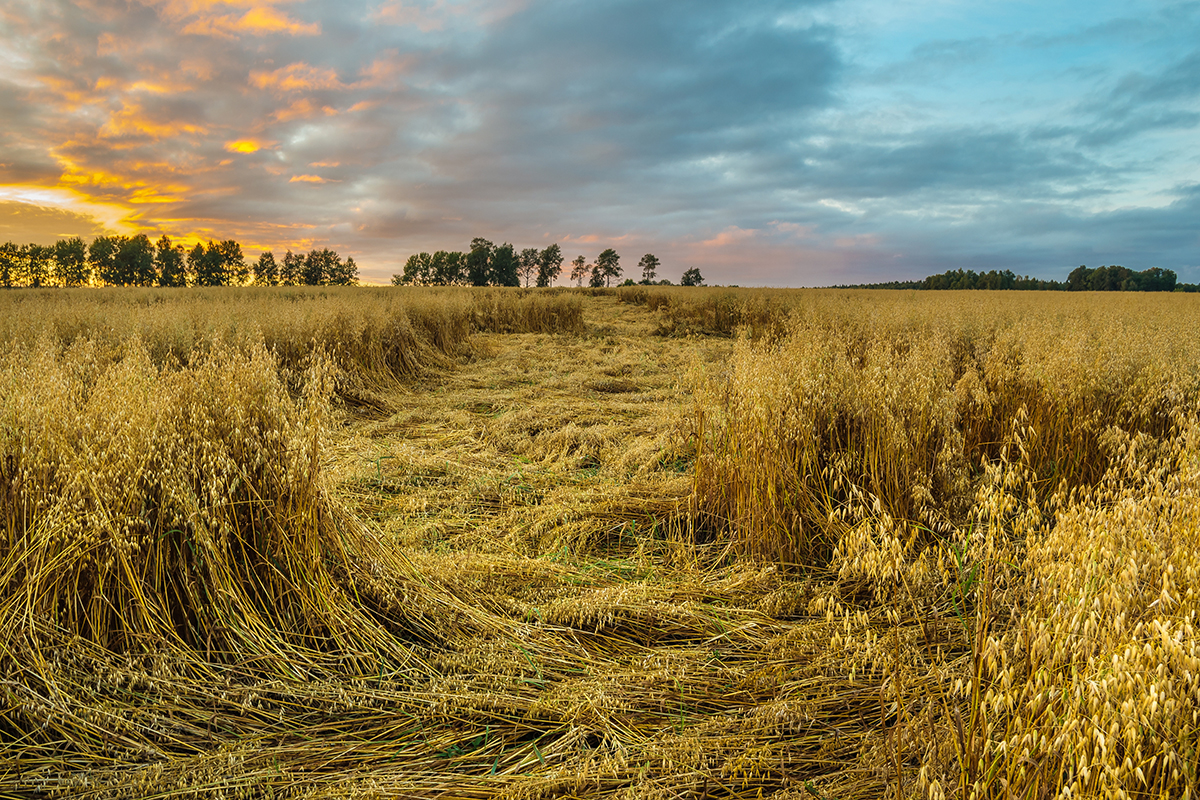
Lodged or ‘Leaning’ Oats
By Margaret Smith, PhD
Albert Lea Seed Agronomist
With the storms and high winds recently in the Upper Midwest, some oats took a hit and are leaning or lodged. What constitutes leaning vs. lodging? Lodging is defined by plant stems at a 45° angle or more from the vertical. And, of course, the more severe that angle from the vertical, the more challenging for oats to right themselves.
Many oats during the recent storms had not yet headed out. Oats are self-pollinating which occurs when the leaf sheath still protects the panicle (before heading). So some of these oats affected by high winds had already—or were in the process of—pollinating.
At oat flowering, there are three nodes above ground. A single event that causes leaning or lodging at this stage will usually be corrected by the plant. They straighten up by elongating cells on the underside or ‘shadow’ side of the plant. (This is the same phenomenon that causes house plants to grow toward the window—cells on the opposite side of the plant are elongating more than those on the sun side.)
Kernel abortion can happen later if the crop doesn’t erect itself and transport of photosynthates within the plant is limited. Most plants that are only ‘leaning’ will likely right themselves within a few days.
If repeated storms affect standability three times or more, particularly bending stems to MORE than 45° from the vertical, oat plants usually can’t withstand that amount of repeated damage and little grain will be set. Check developing plants to decide if a forage harvest may make more sense and return more that oats with severely compromised grain yields.
Farmers have asked about fertility status and its effect on lodging. The biggest nutrient factors affecting strong oat stems are potassium and nitrogen. Potassium should be in the optimum soil test range. Apply nitrogen to deliver 60 to 85 lbs N per acre (including that mineralized from your soil). Micronutrients have much less impact on standability and are more important in grain formation.
Other factors to manage and minimize lodging include oat variety selection. Shorter oats are less prone to lodging as are those with better genetic lodging or straw strength scores (lower numbers are better!).
__
References:
- An introduction to lodging in cereals
- Cereals—Deformation
- Oat Growth and Development. .
- Wiersman, Jochum, personal communication June 11, 2026