
Why are my soybeans purple? Seed and Pod Diseases in Fall 2026
By Margaret Smith, PhD
Albert Lea Seed Agronomist
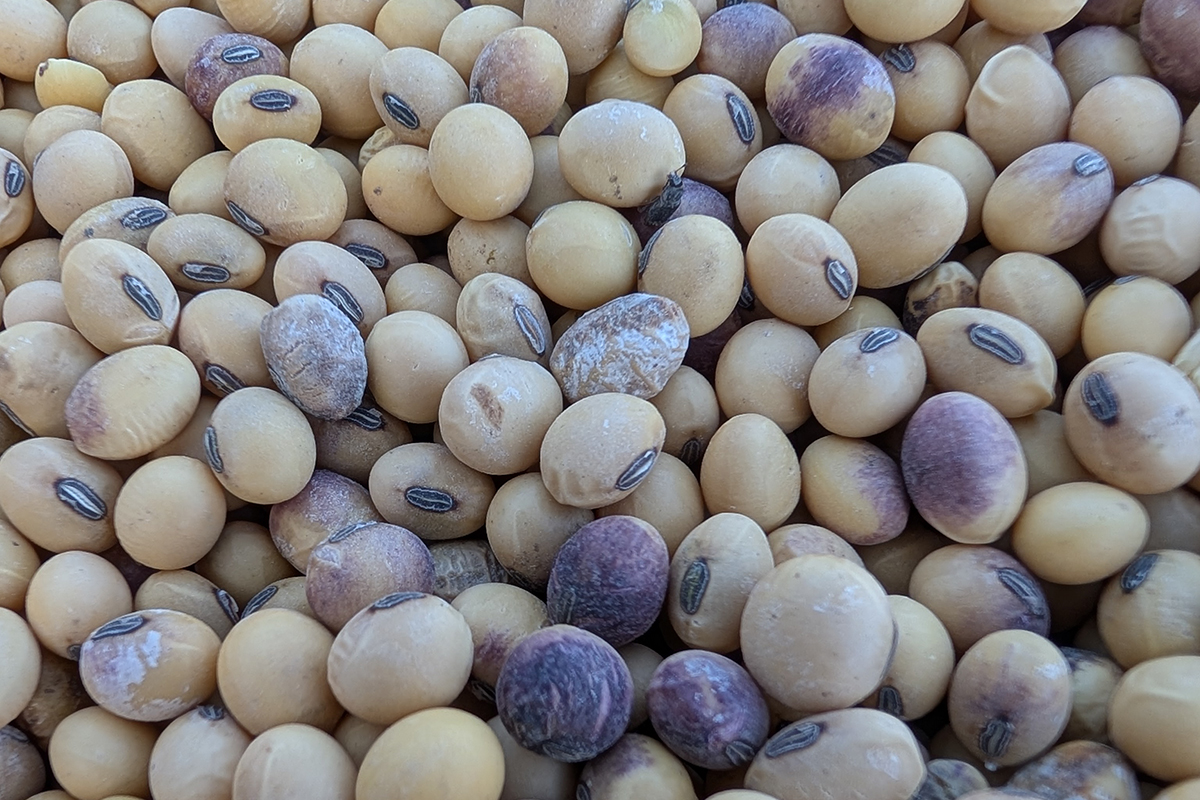
We have had numerous reports of poor soybean grain quality this fall from western Nebraska throughout Iowa, southern Minnesota, and Wisconsin. Purple seed stain is the most prevalent, but evidence of other diseases is also showing up in harvested grain.
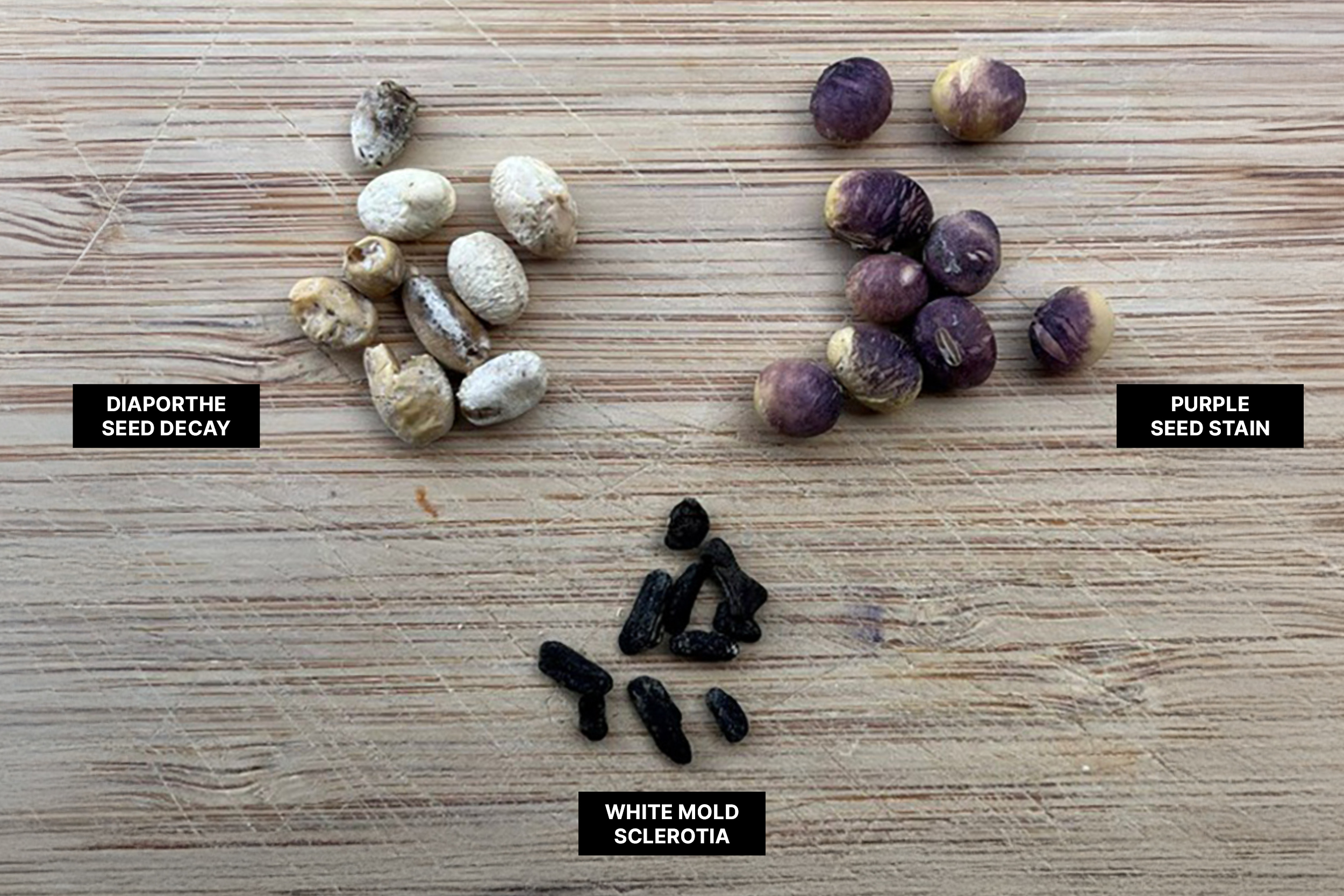
Both the University of Wisconsin and Iowa State University plant pathologists have diagnosed purple seed stain and Diaporthe seed decay (also known as Phomopsis) of soybeans. Some farmers have also seen evidence of white mold, identified by the black sclerotia (containing fungal spores) in their harvested crop. (Some folks think these sclerotia look like rat droppings.)
Purple seed stain is easily identified on seeds and is caused by the fungus Cercospora kikuchii, which can also cause cercospora leaf blight. Though both diseases may occur in a field, one doesn’t necessarily mean that the other will be present. Purple seed stain doesn’t affect soybean yields, but it can lower the value of the crop, particularly for food-grade and seed markets. The purple coloration can affect the color of soy milk and tofu made from the soybeans. It can also carry the fungus into the following year in a seed crop.
Diaporthe seed decay (Phomopsis) causes shriveled, small, and whitish, chalky-colored and/or moldy seeds. The fungus first infects pods, then grows to infect the enclosed seeds. Seed infection stops once grain moisture is below 19%.
White mold (caused by the fungus Sclerotinia sclerotiorum) is soil-borne and infects soybean earlier in the season during flowering when present in the soil and weather is cool, cloudy, wet, and/or humid. It can cause yield reduction and, when severe, plant death before maturity.
Why are we seeing these diseases in 2026?
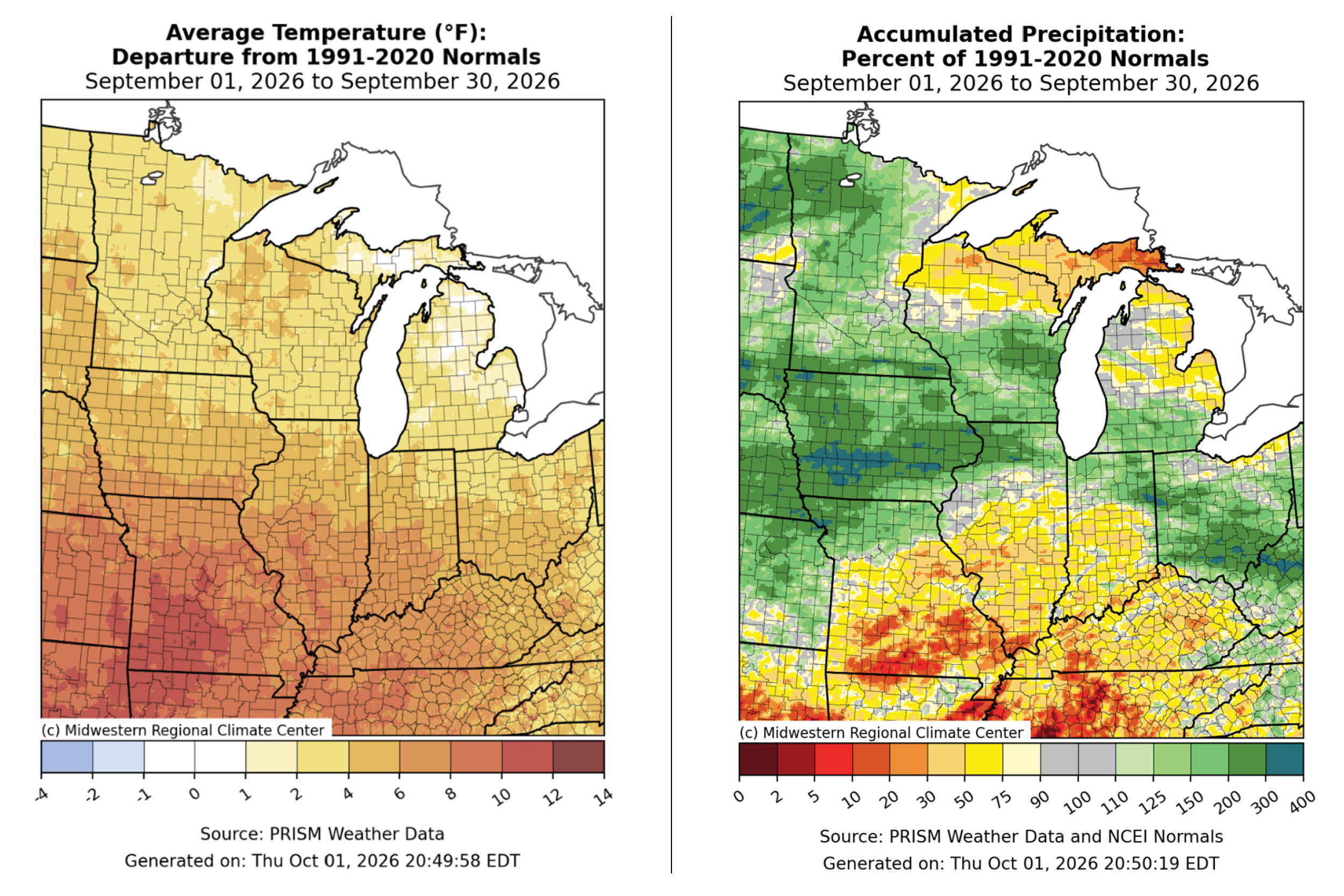
Areas experiencing the highest incidence of disease are where 1) rainfall was above average and frequent, 2) temperatures were high, and 3) overcast, high-humidity conditions persisted during September. The Midwest Regional Climate Center documented average daily temperatures for the Upper Midwest during September this year at 4° to 8° F above the long-term, 30-year average (Fig. 1). Precipitation across the same region ranged from 125% to 300% of the long-term average (Fig. 2). Not surprising: this was also coupled with continued high humidities.
Soybeans that were near or at maturity when the wet weather came on in September were more susceptible to purple seed stain than those that were planted later or were later maturing varieties. Diaporthe seed decay (Phomopsis) infection occurred during reproductive growth stages and continued to grow as long as seed moisture content was at or above 19%.
Harvest and Storage Considerations
Harvest: Remove as many shriveled and moldy soybeans as possible with the combine. Another option, if storing on the farm, is to screen the beans going into your bins. This is fairly effective for removing Phomopsis-infected soybeans and white mold sclerotia, but is NOT a popular option, as screening when unloading slows the harvest process considerably. It may well be worth it if you have a lot of shriveled grain. Unloading straight form the combine, in addition to introducing mold into the stored grain mass, shriveled, Phomopsis-infected kernels also pack tighter and will restrict air flow in the bin. Screening will not improve the quality of soybeans with purple seed stain.
Storage: Plan to store soybeans at 13% moisture or below. If planning to store for four months or more, store at 11% or 12% moisture to stop fungal growth. Cercospora fungi grow best at 75° to 80° F. Our recent weather with highs in the high 80°s has prevented adequately cooling soybeans in bins. Cool your beans at night as soon as temps drop into the 50°s and low 60°s.
Marketing: Before delivering affected soybeans, check with your grain buyer about their grain quality specs and what factors may result in dockage. Depending on the end market, standards may be different from No. 2 soybeans. Purple seed stain doesn’t affect the soybean chemical composition, including protein and oil values, and doesn’t produce any toxins, so feed quality is not reduced. Affected grain may get a special grade designation under USDA standards and can face discounts or rejection in food-grade markets where appearance is important. For food-grade soybeans the price will be docked, as purple seed stains affect the color of soy food products. In addition to a much higher clean out, the buyer will need to incur the cost of color sorting the grain before moving into a food market. With prominent levels of infection, the grain may not make food-grade and will need to be sold for feed.
Seed Quality: Purple seed stain does affect seed germination rates and seedling vigor. Seed must be thoroughly cleaned and sorted by color to achieve seed quality standards. Most Phomopsis-infected soybeans and white mold sclerotia can be cleaned and removed from soybean seed stock.
Managing for 2027
The fungus, Cercospora kikuchii, which causes purple seed stain and cercospora leaf blight, overwinters on infected crop residue. Best management is to rotate to a crop other than soybeans or dry beans and use pathogen-free seed. Some soybean varieties are less susceptible to Cercospora than others, but this isn’t evaluated in every breeding program. Conventional growers can use fungicide-treated seed and, if leaf symptoms show up in mid summer, can treat with a foliar fungicide. White mold may also be treated in season with foliar fungicides. Organic growers must rely on high-quality, disease-free seed and a robust crop rotation. Albert Lea Seed is working with several microbial suppliers to develop other OMRI-listed biological tools, but they may not be ready for the 2027 planting season.
__
References:
- Cercospora Leaf Blight and Purple Seed Stain on Soybeans, University of Minnesota
- Diaporthe Seed Decay of Soybean, Crop Protection Network
- Late-Season Rains Rewrite Soybean Farmers’ Harvest Playbook, AgWeb Farm Journal
- Midwest Regional Climate Center, Purdue University
- Poor Soybean Seed Quality Emerging Across Wisconsin in 2026, Badger Crop Network
- Purple Seed Stain of Soybean, Crop Protection Network
- Soybean Seed Quality Issues During a Wet Fall, Iowa State University
- Tomera, Craig, Identity Preserved Crop Specialist, Grain Millers, Inc. (personal communication, October 12, 2026)