From Seed to Premium Forage: Flex Pro Earns World Dairy Expo Recognition
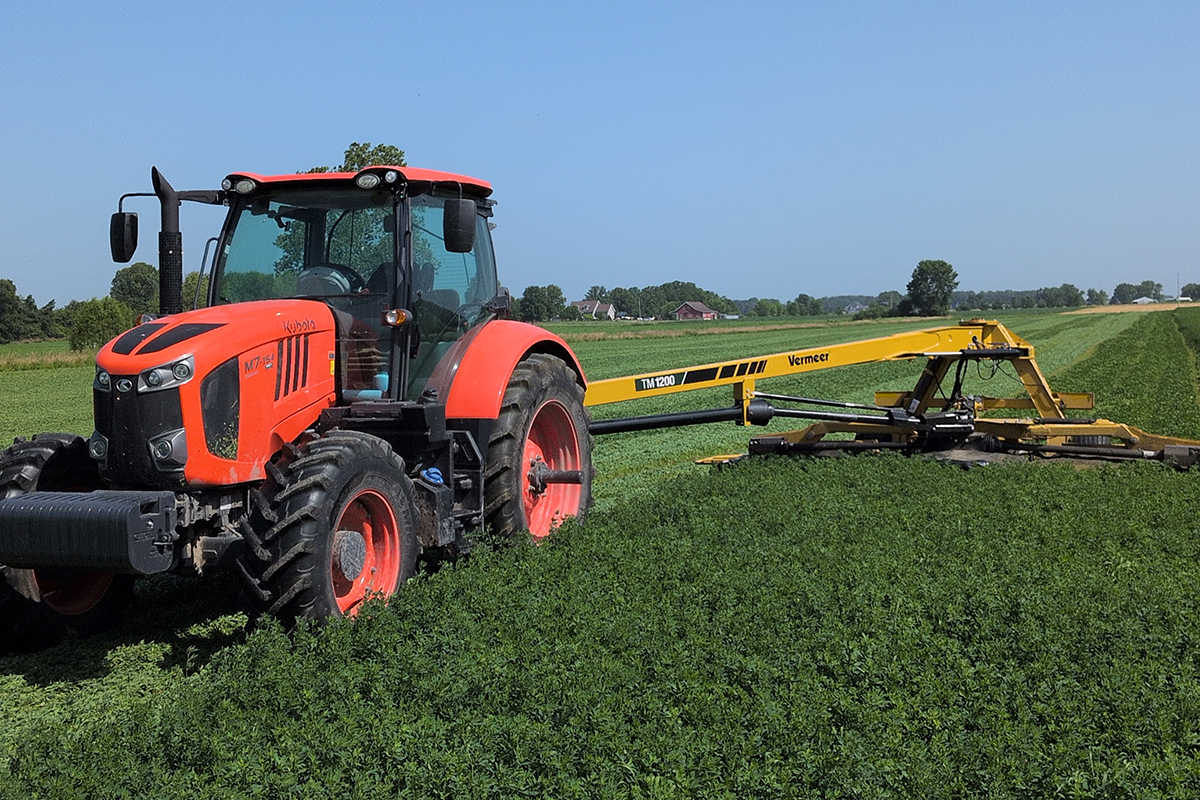
Photo above: Mark Hostetler making hay from a field of Viking Flex Pro Alfalfa Blend.
A sixth-place finish at World Dairy Expo showed what Viking Flex Pro Alfalfa can produce when good genetics are paired with intentional forage management.
When we sat down with Mark Hostetler to talk about Viking Flex Pro Alfalfa Blend’s sixth-place finish in the World Dairy Expo Forage Superbowl, the conversation quickly became about more than an award.
It became a conversation about what separates an ordinary forage crop from a premium one. The answer, according to Mark, begins with the seed but does not end there.
“The seed sets the floor on quality, and your management sets the ceiling.”
That line captured the story better than anything else we discussed.
On his farm in Milford, Indiana, Mark Hostetler planted Viking Flex Pro Alfalfa Blend. In its first full production year, the field produced the forage sample that earned the sixth-place World Dairy Expo finish. The result offered third-party recognition of what the genetics and Mark’s management system were capable of producing together.
Producing Quality Under Challenging Conditions
This was not a season when everything went right.
Mark described fluctuating spring temperatures, summer heat, periods of heavy rainfall, and cold, wet conditions later in the season. The field itself presented challenges, too. It has clay-loam soil, poor drainage, and aging tile.
That context matters. A strong result means more when the crop has had to perform through imperfect conditions.
Flex Pro demonstrated the resilience, persistence, and ability to maintain forage quality that Mark says the blend was designed to provide. As he put it:
“Growing conditions in the countryside aren’t getting any easier.”
Growers cannot plan around perfect weather or perfect fields. They need genetics that can continue producing quality and yield when conditions apply pressure. Mark’s result offered a practical example of that kind of performance.
Management Raises the Ceiling
Listening to Mark walk through his harvest process made one thing clear: the World Dairy Expo result did not happen by accident.
His system is built around preserving forage quality at every step.
Mark mows with a disc cutter-bar mower without conditioner rollers. He replaces the knives before every cutting and lays the crop wide. He typically rakes 1.5 to 2 hours after mowing, bales later that day, and wraps the forage that evening.
He also pays attention to accumulated heat units between cuttings. Rather than harvesting strictly by the calendar, he uses that information to help identify when the crop may be ready.
The lesson is not that every grower must replicate Mark’s process exactly. Farms differ in labor, equipment, timing, and available resources.
The lesson is to be intentional.
Start with genetics capable of producing premium forage. Then build a management system that gives those genetics the best opportunity to deliver.
Quality Matters More When It Comes with Tonnage
Another important insight emerged when Mark was asked what the forage quality meant when considered alongside yield.
Mark estimated that the field produced approximately 6 tons / acre. He was careful to qualify that number because the sixth cutting had not yet been included in the final calculation. That production came without irrigation and under field, fertility, and weather conditions he described as less than ideal.
That shifted the conversation from simply producing quality to yielding quality.
When Mark reviews a feed test, he does not rely on a single measurement. RFQ, milk per ton, and net energy for lactation are among the first metrics he examines.
For a dairy producer, premium forage becomes considerably more valuable when there is enough of it. Quality affects the value of each ton. Yield determines how many tons are available to create that value.
The real opportunity is bringing both together.
Experience Gives the Result More Meaning
The contest finish is an important part of this story, but it is not the entire story.
Mark doesn’t simply talk about forage production from a distance. He is applying these ideas on his own farm.
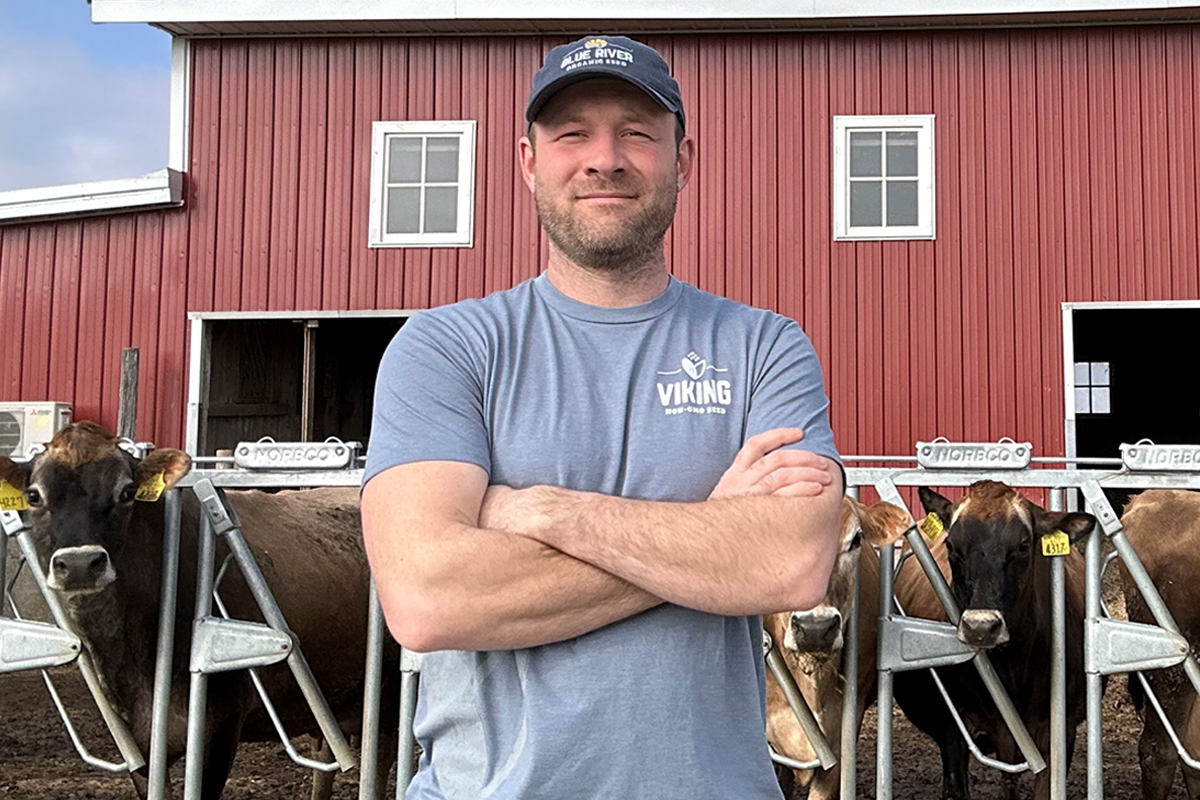
His background includes experience with different hay-production systems and nearly a decade in the seed industry. Today, he uses that experience to help other growers work through seed selection, planting, equipment, harvest management, and cutting timing. He has even helped alfalfa customers use local weather information and accumulated heat units to identify potential cutting windows.
That practical experience came through during our conversation. Mark is not claiming to possess a perfect formula or suggesting that every farm should operate like his. Rather, he explains what he learned, what he watches, and how a grower can make more informed decisions with the resources available.
The World Dairy Expo result gave those ideas another layer of credibility.
“It takes theory and turns it into reality.”
Turning Good Seed into a Premium Product
That is the real point of Mark’s experience. Flex Pro gave him the genetic foundation, but the value came from what he was able to do with it. The seed created the opportunity. His management turned that opportunity into forage that could compete on a national stage.
His meaning is clear:
“We have premium genetics in the bag that, through management, can be turned into a premium product in the field.”
That may be the most useful way to understand the result.
A bag of seed contains potential. Genetics establish what the crop may be capable of producing, but management determines how much of that potential is ultimately captured.
On Mark’s farm, Viking Flex Pro Alfalfa Blend provided the foundation. His management system raised the ceiling. The sixth-place World Dairy Expo finish showed what that combination could become.
More: Printable Case Study | Flex Pro Product Info